


Choosing life insurance can be difficult when you are unfamiliar with the different types of policies available in the United States. Two of the most commonly discussed options are term life insurance and whole life insurance.
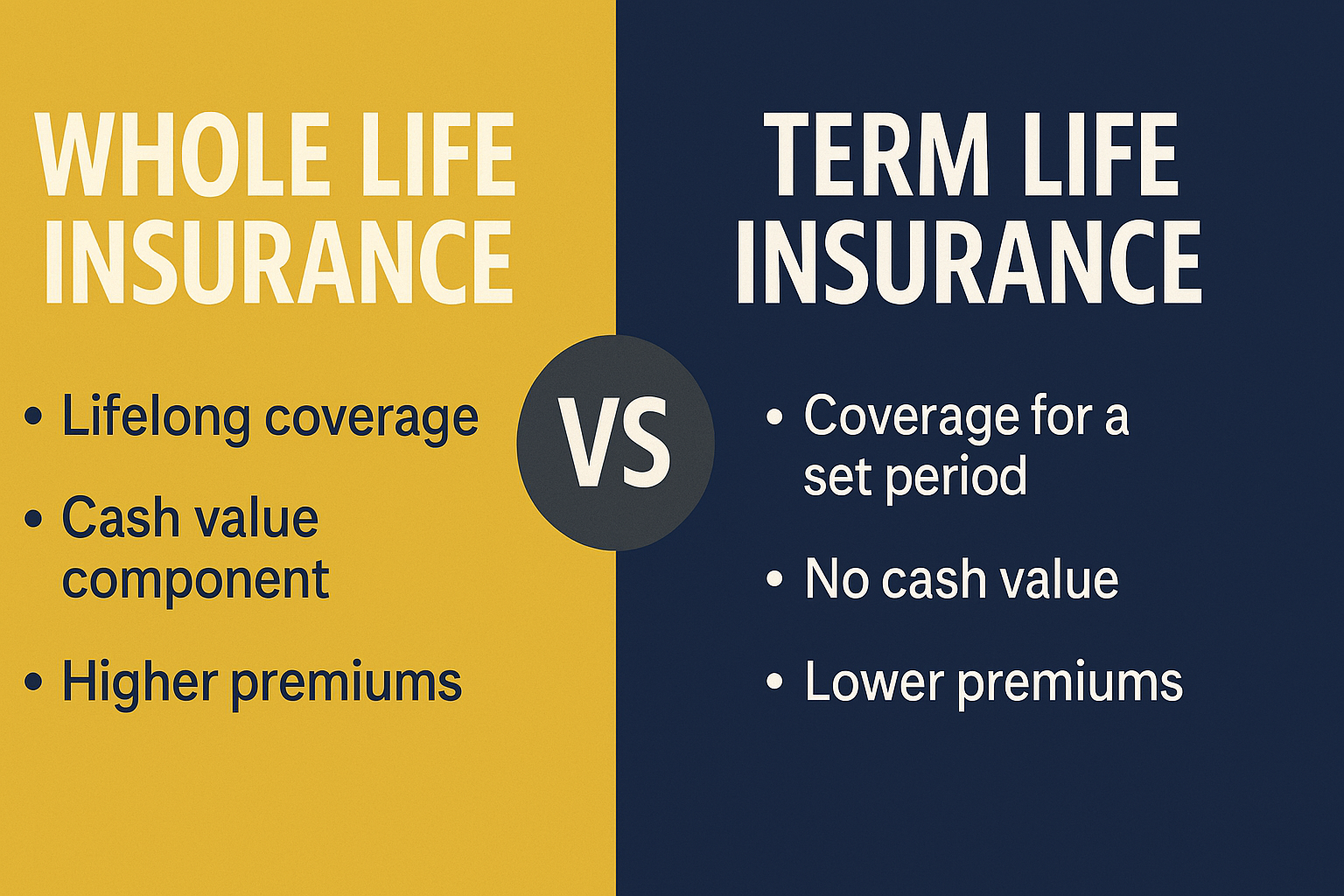
Both can provide a death benefit to beneficiaries, but they work differently. Term life insurance generally provides coverage for a specific period, while whole life insurance is designed to provide permanent coverage as long as the policy remains in force and its requirements are met.
Understanding these differences can help consumers ask better questions and choose coverage that fits their financial circumstances.
What Is Term Life Insurance?
Term life insurance provides coverage for a specified period, known as the policy term. Common term lengths include 10, 20, and 30 years, although available options vary by insurer.
If the insured person dies while the policy is active, the insurer may pay the stated death benefit to the beneficiaries, subject to the policy’s terms and exclusions.
If the insured survives the term, the policy generally ends or reaches its expiration according to the contract. Some policies may offer renewal or conversion options.
Example of Term Life Insurance
Imagine a 35-year-old parent purchases a 20-year term life insurance policy with a $500,000 death benefit.
If the policy remains active and the insured dies during those 20 years, the beneficiaries may receive the $500,000 death benefit according to the policy terms.
If the insured survives the 20-year term, there may be no death benefit simply because the policy term has ended. Depending on the contract, the policy may be renewable or convertible.
What Is Whole Life Insurance?
Whole life insurance is a type of permanent life insurance. It is designed to provide coverage throughout the insured person’s lifetime, provided the policy remains in force and applicable requirements are satisfied.
Unlike basic term insurance, whole life policies generally include a cash value component.
The cash value can grow according to the policy’s contractual provisions and applicable guarantees. Some whole life policies may also pay dividends, but dividends are generally not guaranteed unless specifically stated as guaranteed values.
Whole life insurance usually has higher premiums than comparable term coverage because it is designed to provide permanent protection and may include additional features.
Term Life vs. Whole Life: Main Differences
The biggest differences involve the duration of coverage, cost, cash value, and policy structure.
| Feature | Term Life Insurance | Whole Life Insurance |
|---|---|---|
| Coverage period | Specific term | Designed for lifetime coverage |
| Typical premium | Generally lower initially | Generally higher |
| Cash value | Generally none | Typically included |
| Structure | Relatively straightforward | More complex |
| Death benefit | Paid if death occurs during covered term | Paid according to policy terms while in force |
| Premium structure | Depends on policy | Often designed to remain level |
| Common purpose | Temporary income protection | Long-term/permanent protection |
Specific policy terms can vary, so consumers should review the actual contract rather than relying only on general comparisons.
Cost Differences
One of the most noticeable differences between term and whole life insurance is cost.
Term life insurance is generally less expensive because it provides coverage for a defined period and typically does not build cash value.
Whole life insurance generally costs more because it is designed as permanent coverage and includes a cash value component.
For example, someone primarily interested in replacing income while raising children may find term insurance worth considering because they can obtain a substantial death benefit for a comparatively lower premium.
On the other hand, someone specifically looking for permanent coverage may consider whole life insurance despite the higher premium.
The actual price depends on factors such as age, health, coverage amount, underwriting, tobacco use, policy features, and insurer.
Cash Value: An Important Difference
Whole life insurance generally builds cash value over time.
Cash value is separate from the policy’s death benefit and can have financial uses during the policyholder’s lifetime, depending on the policy terms.
For example, a policyholder may potentially access cash value through a withdrawal or policy loan.
However, accessing cash value is not the same as receiving free money. Loans and withdrawals can reduce the policy’s cash value and death benefit, and unpaid policy loans can have other financial consequences.
Consumers should understand these effects before accessing cash value.
Term life insurance generally does not build cash value.
This makes term policies simpler for consumers who primarily want death-benefit protection rather than a policy with a savings or cash-value component.
Which Is More Affordable?
For many consumers, term life insurance has the lower initial premium.
This is one reason term insurance is often considered when someone needs a large amount of financial protection but has a limited insurance budget.
For example, a young parent may want enough coverage to help replace income and support children if the parent dies unexpectedly. A term policy may provide substantial coverage without the higher premiums associated with permanent insurance.
Whole life insurance usually requires a greater financial commitment.
However, comparing only the monthly premium does not provide a complete picture because the policies serve different purposes.
Term Life Insurance May Be Considered For
Term life insurance may be suitable for people who want financial protection during a particular stage of life.
Common situations include:
Parents With Young Children
Parents may want coverage until their children become financially independent.
Mortgage Protection
A homeowner may want coverage during the years when a mortgage remains outstanding.
Income Replacement
A family may use term insurance to help replace the income of a primary earner if that person dies during the policy term.
Temporary Financial Obligations
Some financial responsibilities have a defined time period. Term insurance can be structured around those years.
People With Limited Budgets
Because term insurance generally has lower premiums than comparable permanent coverage, it may be considered by people seeking substantial protection while controlling insurance costs.
Whole Life Insurance May Be Considered For
Whole life insurance may be considered by people who have a need for permanent life insurance and are comfortable with the higher premiums.
Potential situations include:
Permanent Financial Obligations
Some financial needs may continue throughout a person’s lifetime.
Estate and Legacy Planning
Certain individuals use permanent life insurance as one component of broader estate-planning strategies.
Final Expenses
A permanent policy may be used to help provide funds for final expenses, depending on the coverage amount and policy structure.
Long-Term Financial Planning
Whole life insurance may be incorporated into certain long-term financial strategies, although its suitability depends heavily on the individual’s circumstances.
Complex estate or tax planning should be discussed with qualified professionals.
What Happens When Term Life Insurance Ends?
A common misunderstanding is that every term policy simply disappears at the end of the term.
The actual outcome depends on the policy contract.
Some policies may provide an option to renew coverage after the original term. However, renewal premiums may increase.
Some term policies may also include a conversion feature, allowing the policyholder to convert some or all of the term coverage to a qualifying permanent policy without undergoing a new medical exam, subject to the policy’s rules and deadlines.
Because conversion provisions vary, policyholders should check their specific contract.
Can Whole Life Insurance Be Canceled?
Yes. A policyholder can generally surrender a whole life policy, but canceling it can have financial consequences.
Depending on the policy’s age, cash value, outstanding loans, and other factors, the amount received after surrender may differ significantly from the premiums paid.
There can also be potential tax consequences in certain situations.
Anyone considering surrendering a policy should review the policy’s current values and potential consequences before making a decision.
Term vs. Whole Life: Questions to Ask
Before choosing between these policies, consider the following questions:
1. How Long Do I Need Coverage?
If you primarily need protection for a specific period, term insurance may be worth considering.
If you need permanent coverage, a permanent policy may be more relevant.
2. What Can I Afford?
Consider the premium not only today but also over the period you expect to maintain the policy.
3. Do I Need Cash Value?
If your primary objective is a death benefit, you may not need a cash-value policy.
If permanent coverage and cash value are important to your financial strategy, whole life may deserve consideration.
4. Who Depends on My Income?
Your number of dependents and financial responsibilities can significantly influence the amount and duration of coverage you need.
5. Do I Already Have Life Insurance?
Review existing coverage before purchasing another policy.
Employer-provided insurance, individual policies, and other financial resources may already provide some protection.
Common Mistakes When Comparing Policies
Choosing Only the Cheapest Policy
A lower premium does not automatically mean the policy is the right fit.
Coverage duration, exclusions, conversion options, guarantees, and other features matter.
Ignoring Inflation
A death benefit that appears sufficient today may have less purchasing power decades from now.
Long-term planning should consider future financial needs.
Not Reading the Contract
Marketing materials provide an overview, but the policy documents contain the actual contractual terms.
Assuming All Whole Life Policies Are Identical
Policy features, guarantees, costs, dividends, riders, and other provisions can vary between insurers.
Assuming Term Insurance Is Always Better for Everyone
Term and whole life insurance are designed differently. The appropriate choice depends on the individual’s objectives and financial situation.
Can You Have Both Term and Whole Life Insurance?
In some situations, a person can own both term and permanent life insurance.
For example, someone may use term insurance to provide additional income protection while their children are young and maintain a smaller permanent policy for a long-term financial need.
This approach can create a combination of temporary and permanent coverage.
However, purchasing multiple policies also means paying multiple premiums. The overall strategy should be evaluated based on actual financial needs.
How to Compare Life Insurance Quotes
When comparing quotes in the USA, avoid looking at premium alone.
Review:
- Death benefit
- Policy duration
- Premium guarantees
- Renewal terms
- Conversion options
- Cash value provisions
- Riders
- Exclusions
- Underwriting requirements
- Financial strength of the insurer
It is also important to compare policies with similar coverage amounts and terms. Comparing a 20-year term policy with a permanent policy solely on monthly premium can be misleading because they provide different types of coverage.
Frequently Asked Questions
Is term life insurance cheaper than whole life insurance?
Generally, yes. Term life insurance typically has lower premiums than comparable whole life insurance because it provides coverage for a defined period and generally does not include a cash value component.
Does whole life insurance last forever?
Whole life insurance is designed to provide lifetime coverage, provided the policy remains in force and its contractual requirements are satisfied.
Does term life insurance have cash value?
Traditional term life insurance generally does not build cash value.
Can I convert term life insurance to whole life insurance?
Some term policies include conversion provisions that allow eligible policyholders to convert coverage to a qualifying permanent policy. The exact rules, deadlines, and available products depend on the policy and insurer.
Which policy is better for young adults?
There is no universal answer. A young adult with dependents or financial obligations may have different needs from someone without dependents. Coverage should be based on financial responsibilities, budget, and long-term goals.
Can I change my life insurance policy later?
Depending on the policy, you may have options such as increasing or reducing coverage, adding or removing certain riders, renewing term coverage, or converting eligible term coverage. The available options depend on the contract.
Final Thoughts
Term life insurance and whole life insurance are not simply two versions of the same product. They are designed around different insurance objectives.
Term life insurance generally focuses on providing affordable protection for a defined period. It may be useful for income replacement, mortgage protection, and financial responsibilities that are expected to decline over time.
Whole life insurance is designed as permanent coverage and generally includes a cash value component. It may be considered by people who have long-term insurance needs and are comfortable with higher premiums.
Before purchasing either type, consider your financial responsibilities, dependents, budget, desired coverage period, and long-term goals. Compare policies carefully and read the actual contract to understand guarantees, exclusions, fees, and other provisions.
For complicated financial, tax, estate, or business situations, qualified insurance, financial, tax, or legal professionals can help explain how a particular policy may fit into an individual’s overall plan.