



When people shop for life insurance in the United States, one of the first questions they usually ask is, “How much will it cost?”
The answer depends on several factors. Life insurance companies evaluate an applicant’s age, health, coverage amount, policy type, lifestyle, and other information when determining premiums.
Two people looking for the same amount of coverage can receive very different quotes because their risk profiles and policy details may be different.
Understanding how life insurance premiums are calculated can help consumers compare policies more effectively and avoid surprises during the application process.
What Is a Life Insurance Premium?
A life insurance premium is the amount a policyholder pays to keep an insurance policy active.
Depending on the policy, premiums may be paid:
- Monthly
- Quarterly
- Semiannually
- Annually
The payment schedule depends on the insurer and policy contract.
If required premiums are not paid according to the policy terms, coverage could eventually lapse. Some policies may have a grace period or other provisions, so policyholders should understand their specific contract.
Why Do Life Insurance Companies Charge Different Premiums?
Insurance companies use underwriting to evaluate risk.
In simple terms, the insurer is trying to estimate the likelihood of paying a death benefit during the applicable coverage period.
The company may consider information such as:
- Age
- Health history
- Tobacco use
- Family medical history
- Coverage amount
- Policy duration
- Occupation
- Lifestyle
- Medical examination results
- Prescription history
- Other underwriting information
The exact factors and their impact can vary by insurer and policy.
Age and Life Insurance Premiums
Age is one of the most important factors affecting life insurance pricing.
Generally, younger applicants may qualify for lower premiums because they typically have a longer expected period before mortality risk becomes higher.
For example, a healthy 30-year-old and a healthy 55-year-old may apply for the same type and amount of coverage, but their premiums can be substantially different.
This is one reason some people consider purchasing life insurance earlier when they have a financial need for coverage.
However, age alone does not determine the final premium.
Health and Medical History
An applicant’s health can have a significant effect on life insurance pricing.
Depending on the insurer and policy, underwriting may consider information such as:
- Blood pressure
- Cholesterol
- Diabetes
- Heart conditions
- Cancer history
- Respiratory conditions
- Medications
- Previous surgeries
- Height and weight
- Other medical conditions
Not every policy uses the same underwriting process.
Some policies may require a medical examination, while others may use accelerated or simplified underwriting.
Applicants should provide accurate information during the application process.
Tobacco and Nicotine Use
Tobacco use can significantly affect life insurance premiums.
An insurer may ask about:
- Cigarettes
- Cigars
- Chewing tobacco
- Nicotine products
- Other tobacco or nicotine use
The insurer’s definition of tobacco use can vary, so applicants should answer according to the questions in the application.
Providing inaccurate information can create problems during underwriting and potentially during a future claim review.
Coverage Amount
The amount of life insurance you purchase is another major factor in determining your premium.
A $250,000 policy generally represents a smaller financial obligation for the insurer than a $1 million policy.
Therefore, higher coverage amounts generally result in higher premiums.
However, the cost does not always increase in a simple one-to-one relationship.
For example, purchasing twice the coverage does not necessarily mean paying exactly twice the premium.
Pricing depends on the insurer’s underwriting and rate structure.
Policy Type
The type of life insurance also affects the premium.
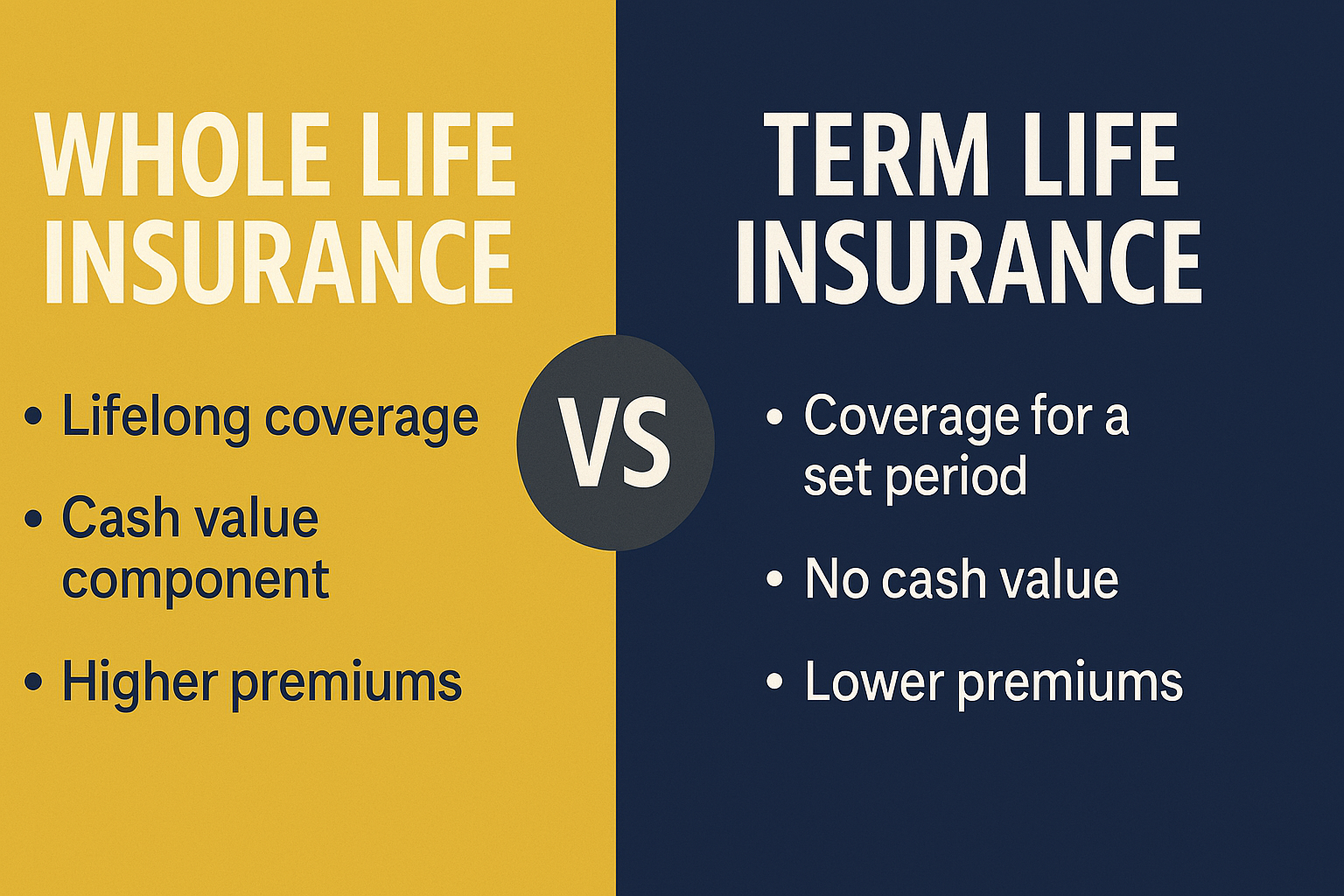
Term Life Insurance
Term life insurance provides coverage for a specified period.
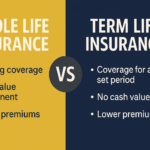
Because it generally does not include a cash value component and provides protection for a defined term, it often has lower premiums than comparable permanent coverage.
Whole Life Insurance
Whole life insurance is designed to provide permanent coverage and generally includes a cash value component.
Because of these additional features and the lifetime nature of the coverage, premiums are typically higher than those for comparable term insurance.
Universal Life Insurance
Universal life insurance is another form of permanent coverage.
Its pricing and policy mechanics can be more complicated because policies may include flexible premium structures, cash value components, interest-crediting features, and other provisions.
Consumers should carefully review the policy’s guaranteed and non-guaranteed elements.
Policy Length and Premiums
For term life insurance, the length of the policy can influence the premium.
A 10-year term may cost less than a comparable 30-year term because the insurer is providing protection for a shorter period.
For example, someone who needs coverage only until their children become financially independent may consider a shorter policy term than someone who wants protection through a longer working period.
The appropriate term depends on the financial need being protected.
Gender and Life Insurance Pricing
Life insurance pricing can also reflect mortality assumptions used by insurers, which may include sex-related actuarial factors where permitted by applicable law.
Pricing rules vary by state and insurer, and applicants should rely on an actual quote rather than assuming a specific premium based on general averages.
Occupation and Risky Activities
Some occupations involve greater risks than others.
For example, jobs involving significant heights, dangerous machinery, aviation, or other hazardous environments may receive additional underwriting consideration.
Insurers may also ask about recreational activities such as:
- Skydiving
- Scuba diving
- Mountain climbing
- Racing
- Certain aviation activities
The impact depends on the insurer’s underwriting guidelines and the specific activity.
Family Medical History
Some insurers may consider family medical history as part of underwriting.
Questions may involve serious medical conditions affecting close relatives, particularly when those conditions occurred at relatively young ages.
The extent to which family history affects pricing varies by insurer and policy.
Driving Record
Certain life insurance applications may ask about driving history.
A history involving serious traffic violations, impaired driving, or repeated dangerous driving may receive underwriting consideration because it can indicate elevated risk.
The exact impact depends on the insurer.
Financial Information
For some applications, insurers may consider financial information, particularly when determining whether the requested coverage amount is reasonable relative to the applicant’s circumstances.
This can be especially relevant for very large policies.
The insurer may want to understand the financial purpose of the coverage and whether the requested amount is consistent with the applicant’s income, assets, debts, and financial obligations.
Medical Exam vs. No-Exam Insurance
Life insurance is not always based on a traditional medical examination.
Fully Underwritten Policies
A fully underwritten application may involve:
- Detailed health questions
- Medical records
- Prescription information
- Medical examination
- Blood or urine testing
- Other underwriting data
This process can take longer but may provide access to competitive rates for applicants who qualify.
No-Exam Policies
No-exam policies generally do not require a traditional medical examination.
However, this does not necessarily mean the insurer ignores health information.
The company may still evaluate information from the application and other permitted sources.
Some no-exam policies may have higher premiums or lower coverage limits, depending on the insurer and product.
How Health Classes Affect Premiums
Many life insurance companies place applicants into underwriting categories or risk classes.
The names vary by insurer, but categories may distinguish applicants based on factors such as health and lifestyle.
For example, an insurer might have categories representing exceptionally healthy applicants, standard-risk applicants, and applicants with certain higher-risk characteristics.
The exact definitions and pricing differences vary by company.
This is why comparing quotes from multiple insurers can be useful.
How Your Credit Score Relates to Life Insurance
Consumers sometimes assume that life insurance works like auto or homeowners insurance and that a standard credit score directly determines the premium.
Life insurance underwriting generally focuses more heavily on mortality-related factors such as age, health, lifestyle, and policy characteristics.
However, insurers may use certain financial or consumer-report information in accordance with applicable laws and their underwriting practices.
Applicants should review the insurer’s privacy and underwriting disclosures for details.
Why Two Companies Can Offer Different Quotes
Life insurance pricing is not identical across insurers.
Each company can have its own:
- Underwriting guidelines
- Pricing models
- Preferred customer profiles
- Product designs
- Risk appetite
- Policy features
As a result, the same applicant may receive different quotes from different companies.
For example, an applicant with a particular health history might receive a more favorable offer from one insurer than another.
This is one reason comparing insurers can be valuable.
How to Potentially Reduce Life Insurance Costs
There is no guaranteed method to obtain a lower premium, but consumers can take several practical steps.
Compare Multiple Insurers
Do not assume every company will offer the same price.
Comparing policies with equivalent coverage and terms can reveal meaningful differences.
Choose an Appropriate Coverage Amount
Avoid buying substantially more coverage than your financial needs require.
At the same time, avoid reducing coverage simply to obtain the lowest possible premium if your family actually needs greater protection.
Consider the Policy Term Carefully
If you need temporary protection, selecting a term that matches the period of financial responsibility may help avoid paying for unnecessary years of coverage.
Maintain Healthy Habits
Health and lifestyle can affect underwriting.
Maintaining healthy habits may improve overall health and, depending on the insurer’s underwriting process, may affect eligibility or pricing.
Review Tobacco Status Honestly
Tobacco use can affect premiums significantly. Applicants should provide accurate information rather than attempting to hide tobacco use.
Avoid Unnecessary Riders
Some policies offer optional riders that provide additional benefits.
Riders can be useful for certain consumers, but they may increase the overall cost.
Review whether each rider addresses a genuine financial need.
What Is a Life Insurance Quote?
A quote is an estimate of what an insurance policy may cost based on information available at the time.
It is important to understand that an initial quote may not always be the final premium.
After submitting an application, the insurer may perform underwriting and obtain additional information.
The final offer may therefore differ from the initial estimate.
Why Your Final Premium May Be Different
Several things can cause the final premium to differ from an initial quote.
For example:
- Additional medical information becomes available
- The applicant’s health information changes
- Tobacco use is clarified
- The requested coverage changes
- The policy type changes
- Underwriting identifies additional risk factors
Consumers should review the final policy offer carefully before accepting coverage.
Guaranteed vs. Non-Guaranteed Values
This distinction is particularly important for permanent life insurance.
Some policy values may be guaranteed under the contract, while others may depend on assumptions or future performance.
For example, certain whole life policies may show both guaranteed and non-guaranteed values.
Consumers should understand the difference before relying on projected cash values or future benefits.
Can Premiums Increase?
Whether premiums can increase depends on the type of policy and its contractual terms.
Many traditional level-term policies are designed with a fixed premium during the initial term.
Other policies may have premiums that can change according to the contract.
Permanent policies can also have different premium structures.
Never assume that a premium is guaranteed to remain unchanged without reviewing the policy documents.
What Happens If You Stop Paying?
If you stop paying premiums, the policy may eventually lapse, depending on the policy’s terms and available grace periods or cash value.
Permanent policies may have additional provisions that can affect what happens after missed payments.
For example, certain policies may use available cash value to cover premiums for a period, while others may provide different options.
The consequences depend entirely on the policy contract.
Frequently Asked Questions
What is the average cost of life insurance in the USA?
There is no single average premium that accurately represents every applicant. Cost varies based on age, health, coverage amount, policy type, term length, tobacco use, and other underwriting factors.
Is life insurance cheaper when you are younger?
Generally, younger applicants may receive lower premiums for comparable coverage because age is an important underwriting factor. Individual pricing varies.
Does health affect life insurance premiums?
Yes. Health history can be an important part of underwriting, although the exact impact varies by insurer and policy.
Does smoking increase life insurance costs?
Tobacco use can significantly affect premiums. The insurer’s rules determine how different forms of tobacco or nicotine use are classified.
Is term life insurance cheaper than whole life insurance?
Term life insurance generally has lower premiums than comparable whole life insurance because term coverage is temporary and generally does not include a cash value component.
Can I get life insurance without a medical exam?
Yes. Some insurers offer no-exam or accelerated-underwriting policies. However, these policies may have different eligibility requirements, coverage limits, or pricing.
Why should I compare multiple insurance companies?
Different insurers can evaluate the same applicant differently. Comparing policies can help consumers understand differences in premiums, coverage, features, and underwriting requirements.
Final Thoughts
Life insurance premiums in the USA are based on a combination of factors rather than a single formula.
Age, health, tobacco use, coverage amount, policy type, policy duration, lifestyle, occupation, and other underwriting information can all influence pricing.
Term life insurance generally has lower premiums than comparable permanent coverage, while whole life and other permanent policies may cost more because they provide lifetime protection and may include cash value features.
The best way to understand your actual cost is to compare quotes based on the same coverage amount and policy duration, then review the final policy terms carefully.
A low premium is only one part of the decision. Consumers should also consider the insurer, financial strength, coverage features, exclusions, guarantees, renewal provisions, and whether the policy actually meets their financial objectives.
For complicated financial, tax, estate, or business situations, consulting an appropriately qualified professional can help you evaluate how life insurance fits into your broader financial plan.