





Choosing the right amount of life insurance coverage is one of the most important decisions when purchasing a policy. Too little coverage may leave your family struggling with financial obligations, while buying more coverage than you need can increase your premiums unnecessarily.
There is no universal life insurance amount that works for every person in the United States. The right level of coverage depends on income, debts, dependents, savings, future expenses, existing insurance, and the financial goals you want to protect.
This guide explains the main factors to consider when estimating how much life insurance coverage you may need.
Why the Right Coverage Amount Matters
The primary purpose of life insurance is to provide financial protection to beneficiaries after the insured person’s death.
For a family, the death of an income-earning spouse or parent can affect many areas of financial life. The family may need to replace lost income, pay debts, maintain housing, fund education, and cover everyday expenses.
A policy with an insufficient death benefit may not provide enough financial support.
On the other hand, purchasing substantially more coverage than necessary can result in higher premiums without addressing an actual financial need.
The goal is to estimate the financial resources your beneficiaries may need and compare that amount with the resources they would already have.
Start With Your Financial Responsibilities
A useful first step is to make a list of the financial obligations that would remain if you died.
Consider:
- Mortgage balance
- Personal loans
- Credit card debt
- Car loans
- Education-related debt
- Household expenses
- Childcare costs
- Future education expenses
- Funeral and final expenses
- Business obligations
- Other financial commitments
The purpose is not necessarily to pay every expense entirely with life insurance. Instead, the list helps you understand the financial gap your family could face.
Consider Your Income
Income replacement is one of the most important factors for many households.
Suppose someone earns $70,000 per year and their family depends heavily on that income. If that person dies, the household could lose years of expected earnings.
A simple calculation might start with:
Annual income × number of years of expected financial dependence
For example:
$70,000 × 15 years = $1,050,000
This does not mean the person automatically needs a $1.05 million policy. The calculation is only a starting point.
Existing savings, retirement accounts, a spouse’s income, Social Security benefits where applicable, debts, taxes, inflation, and future expenses may change the amount of coverage required.
Don’t Forget Your Mortgage
A mortgage can represent one of the largest financial obligations for a household.
If a family member dies, surviving household members may still need to make mortgage payments.
When estimating life insurance needs, consider:
- Current mortgage balance
- Remaining loan term
- Monthly payment
- Property taxes
- Homeowners insurance
- Maintenance costs
Some families may want the death benefit to help eliminate the mortgage, while others may prefer to keep the mortgage and use insurance proceeds for broader financial needs.
The appropriate approach depends on the family’s overall financial plan.
Think About Your Children
Parents often purchase life insurance because their children depend on them financially.
Children can create significant long-term expenses, including:
- Food
- Housing
- Childcare
- School expenses
- Transportation
- Healthcare
- Extracurricular activities
- College or other post-secondary education
The younger the children are, the longer the period of potential financial dependence may be.
Parents should therefore consider not only today’s expenses but also future costs.
Education Costs
Parents who want to contribute toward their children’s education may include an education fund in their life insurance calculation.
The amount required depends on several factors, including:
- Number of children
- Children’s ages
- Current savings
- Expected contribution
- Type of education
- Expected future costs
Future education expenses are difficult to predict precisely, so consumers should avoid treating estimates as guaranteed costs.
Consider Existing Savings and Investments
Life insurance needs should not be calculated in isolation.
Existing financial resources can reduce the amount of additional coverage needed.
Potential resources may include:
- Savings accounts
- Investment accounts
- Retirement assets
- Existing life insurance
- Employer-sponsored life insurance
- Other financial assets
For example, a person with $300,000 in accessible financial assets may have a different insurance requirement from someone with the same income but minimal savings.
Employer-Provided Life Insurance
Many employees have access to life insurance through their employer.
This coverage can be valuable, but employees should understand its limitations.
Important questions include:
- How much coverage is provided?
- Is the coverage free or employee-paid?
- Does coverage change with age?
- Can the policy continue after leaving the employer?
- Is the coverage portable?
- Are there additional options for purchasing supplemental coverage?
Employer-sponsored insurance may be only one part of an overall life insurance strategy.
Account for Your Spouse’s Income
If your spouse works, their income may continue after your death.
This can reduce the amount of income replacement required from life insurance.
However, the surviving spouse may also face additional costs.
For example, childcare expenses could increase if one parent is no longer available to provide unpaid childcare.
The calculation should therefore consider the household’s actual financial situation rather than simply subtracting the spouse’s salary.
Childcare Is Often Overlooked
Childcare can be a major expense for families with young children.
If one parent dies, the surviving parent may need to purchase childcare that was previously provided by the deceased parent.
Consider expenses such as:
- Daycare
- After-school care
- Babysitting
- Transportation
- Summer childcare
- Household assistance
These costs can continue for years, depending on the children’s ages.
Consider Final Expenses
Funeral and other final expenses can create immediate financial pressure.
The amount required varies significantly depending on individual preferences and circumstances.
Instead of using a fixed number, consider your family’s likely expenses and whether existing savings could cover them.
Final expenses are only one part of a broader life insurance calculation.
Business Owners Have Additional Considerations
Business owners may need to consider financial obligations beyond household expenses.
Depending on the business structure and ownership arrangements, life insurance may potentially be used as part of business planning.
Possible considerations include:
- Business debt
- Ownership interests
- Key-person risks
- Buy-sell arrangements
- Business succession
- Financial support for surviving owners
Business-related life insurance arrangements can have legal, tax, and contractual implications. Professional advice may be appropriate.
A Simple Life Insurance Calculation
One common approach is to estimate financial needs and subtract existing resources.
A simplified formula could look like this:
Life Insurance Need = Financial Obligations + Future Income Needs + Future Goals − Existing Financial Resources
For example, suppose a household estimates:
- $300,000 mortgage
- $50,000 other debts
- $600,000 income replacement need
- $150,000 education and childcare needs
- $50,000 final expenses
Total estimated needs:
$1,150,000
If the family already has:
- $100,000 savings
- $100,000 existing life insurance
Available resources:
$200,000
Estimated additional insurance need:
$950,000
This is only an illustration, not a recommendation. Actual financial needs can be more complicated.
The “10 Times Your Income” Rule
You may have heard that people should buy life insurance equal to 10 times their annual income.
For example, someone earning $80,000 might be told to purchase $800,000 of coverage.
This rule can be a quick starting point, but it does not account for individual circumstances.
Two people earning the same salary may have completely different insurance needs.
Consider:
Person A
- $80,000 income
- No children
- No mortgage
- $500,000 investments
Person B
- $80,000 income
- Three young children
- $400,000 mortgage
- Significant financial obligations
Their life insurance needs could be very different.
A personalized analysis is generally more useful than relying exclusively on a simple income multiplier.
How Inflation Can Affect Life Insurance Needs
Inflation can reduce the purchasing power of money over time.
A $1 million death benefit received decades from now may not have the same purchasing power as $1 million today.
This is especially relevant when purchasing long-term coverage.
When estimating future needs, consider whether the amount you select would reasonably support the financial goals you are trying to protect.
However, future inflation rates cannot be known with certainty.
How Long Should Your Coverage Last?
The coverage amount is only one part of the decision.
You should also consider how long the insurance needs to remain in place.
For example, someone may want coverage until:
- Children become financially independent
- A mortgage is paid off
- Retirement savings reach a certain level
- A spouse reaches retirement age
- Other major financial obligations decline
A 10-year, 20-year, and 30-year term policy provide protection over different periods.
The appropriate term depends on the financial responsibility you are trying to protect.
What If Your Financial Situation Changes?
Life insurance needs can change over time.
You may need to review your coverage after major life events such as:
- Marriage
- Divorce
- Birth or adoption of a child
- Home purchase
- Major salary increase
- Starting a business
- Significant inheritance
- Retirement
- Major change in debt
For example, someone who purchased a policy when they had one child and a large mortgage may have different needs after their children become financially independent and the mortgage is nearly paid off.
Regular reviews can help ensure your coverage remains aligned with your circumstances.
Should You Buy More Coverage Than You Currently Need?
Some people consider purchasing additional coverage because their future financial responsibilities may increase.
However, buying extra coverage also means paying additional premiums.
Instead of automatically purchasing the largest available policy, consider the purpose of the coverage.
Ask:
- What financial risk am I trying to protect?
- Who depends on my income?
- How long will that dependency continue?
- What debts need to be addressed?
- What assets already exist?
- What future expenses should be included?
These questions can make the calculation more practical.
Term Life Insurance and Coverage Amount
Term life insurance is often considered when someone wants a large death benefit for a specific period.
For example, a parent may want substantial coverage while children are young and the mortgage remains outstanding.
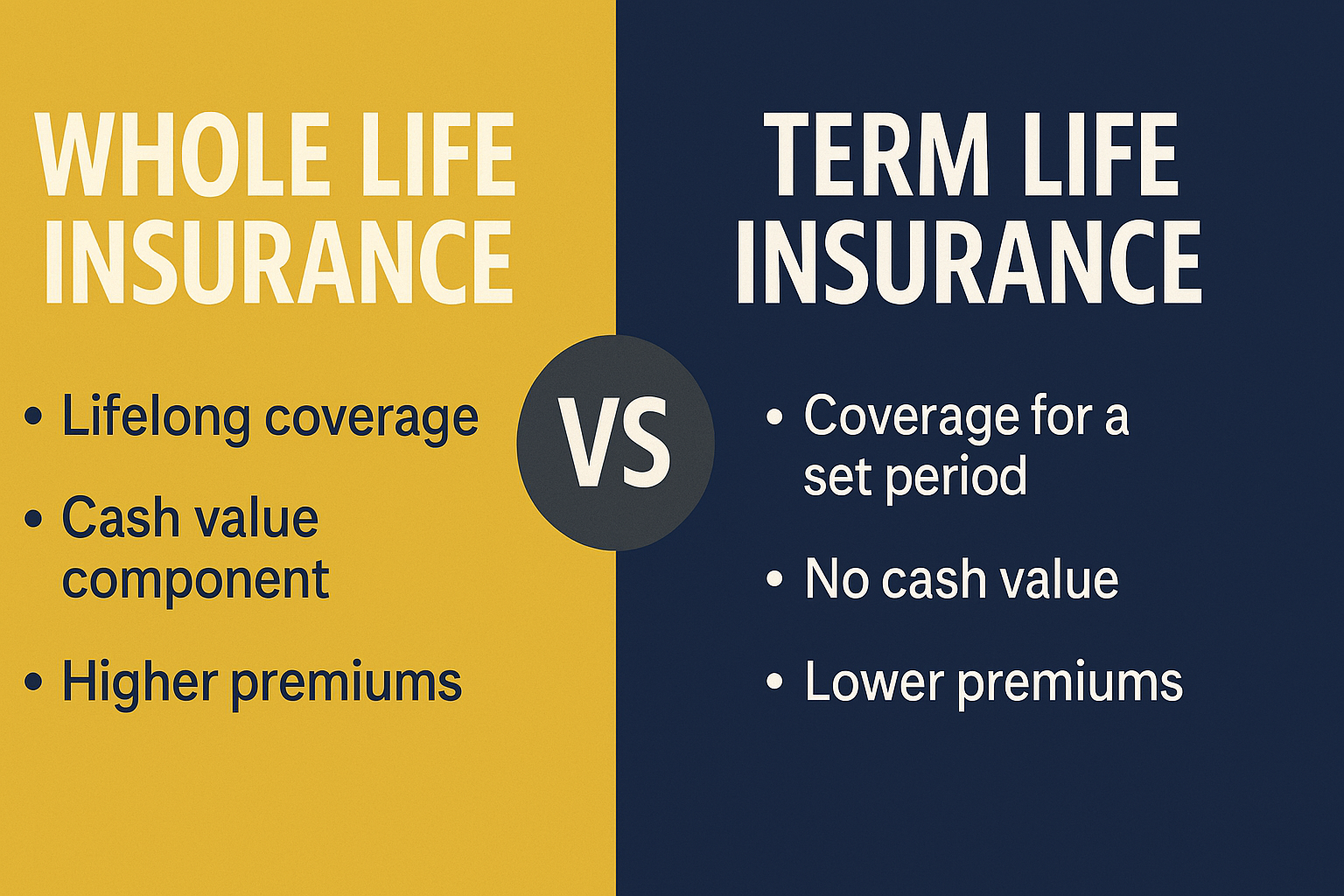
Because term insurance generally has lower premiums than comparable permanent insurance, it may allow some households to purchase a larger death benefit within their budget.
However, policy costs and eligibility vary by individual and insurer.
Whole Life Insurance and Coverage Amount
Whole life insurance is designed differently.
Instead of covering only a specified period, it is intended to provide permanent coverage while the policy remains in force.
Whole life insurance generally has higher premiums and includes a cash value component.
Someone considering whole life insurance should evaluate both the amount of death benefit and the policy’s long-term financial features.
The policy contract should be reviewed carefully to understand guaranteed values, non-guaranteed values, premiums, cash value, and other provisions.
Can You Change Your Coverage Later?
In some situations, you may be able to change your life insurance coverage.
Options depend on the policy and insurer and may include:
- Purchasing additional coverage
- Reducing coverage
- Renewing term insurance
- Converting eligible term coverage
- Purchasing another policy
A new policy may require new underwriting and could have different premiums because of changes in age or health.
Therefore, it is useful to review your insurance needs before making major changes to an existing policy.
Questions to Ask Before Choosing a Coverage Amount
Before purchasing life insurance, consider these questions:
- Who would financially depend on me if I died?
- How much income would my household lose?
- What debts would remain?
- How much is left on my mortgage?
- How much would childcare cost?
- Do I want to fund education expenses?
- What savings and investments already exist?
- How much life insurance do I already have?
- How much coverage does my employer provide?
- How long would my family need financial support?
Writing down the answers can make the coverage decision much easier.
Frequently Asked Questions
How much life insurance should an average person have?
There is no single amount that is appropriate for everyone. Coverage should reflect income, dependents, debts, assets, future expenses, and the length of time financial support may be needed.
Is $500,000 enough life insurance?
It depends on the person’s circumstances. For some households, $500,000 may provide meaningful financial support. For others, it may not be enough to replace income and cover long-term obligations.
Is $1 million life insurance enough?
A $1 million policy can provide substantial protection, but whether it is sufficient depends on the household’s income, debts, dependents, assets, and financial goals.
Should stay-at-home parents have life insurance?
A stay-at-home parent may provide valuable unpaid services such as childcare, transportation, household management, and other responsibilities. Replacing these services could create significant expenses, so their financial contribution can be considered when evaluating life insurance needs.
Should both spouses have life insurance?
It can be appropriate for both spouses to have coverage when both provide financial or household support. The amount of coverage does not necessarily need to be identical.
Can life insurance replace my entire income?
A death benefit can potentially provide financial resources to replace some or all of the economic value of lost income, but the appropriate amount depends on the family’s circumstances and available assets.
Final Thoughts
Determining how much life insurance you need is more complicated than multiplying your salary by a fixed number.
A meaningful estimate should consider your income, mortgage, debts, children, childcare, education goals, final expenses, existing assets, employer coverage, and the amount of time your family may need financial support.
A simple needs-based calculation can provide a useful starting point, but it should not be treated as a precise financial recommendation.
As your financial circumstances change, your life insurance needs may change as well. Reviewing your coverage after major life events can help keep your financial protection aligned with your family’s situation.
Before purchasing a policy, compare the actual coverage, premiums, policy duration, exclusions, guarantees, and other contractual provisions. For complex financial, tax, estate, or business circumstances, consider consulting appropriately qualified professionals.